

How UAE Economic Policies Influence the Real Estate Market
February 19, 2025


The UAE’s real estate market has long been a dynamic and attractive sector for investors, both local and international. Various factors contribute to its growth, and one of the most significant drivers is the country’s economic policies. The UAE government’s approach to taxation, foreign investment, infrastructure development, and financial regulations has a direct and substantial impact on the real estate sector. This article explores how UAE economic policies and real estate influence the market, and how these policies shape investment decisions and opportunities in the country.
As part of our commitment to ensuring the sustained progress of government initiatives that reinforce Dubai’s global leadership, I met with Marwan bin Ghalita, Director General of the Dubai Land Department, to review the strategic projects of the Dubai Real Estate Sector Strategy… pic.twitter.com/2g0yodwMmS
— Hamdan bin Mohammed (@HamdanMohammed) November 25, 2024
The UAE has adopted a series of progressive economic policies that are designed to diversify the economy, reduce reliance on oil, and encourage foreign investment. These policies aim to create a favorable environment for both local businesses and international investors. A key goal is to maintain long-term economic stability and growth.
The UAE government has consistently implemented economic reforms, improved infrastructure, and fostered a business-friendly environment. These efforts have been crucial in strengthening sectors like real estate, tourism, and finance. Policies supporting these sectors include relaxed property ownership laws, tax incentives, and streamlined regulatory processes.
One of the UAE’s most important economic strategies is diversification. Historically, the country’s economy has relied heavily on oil revenue, but recent efforts have focused on expanding other sectors such as tourism, finance, and technology. The diversification of the economy has had a profound effect on the UAE economic policies real estate market, creating new demand for commercial and residential properties.
As the UAE shifts toward a more diversified economy, there is an increased demand for commercial spaces, like Dubai’s top locations to lease retail spaces as well as office buildings, and industrial zones. The growth of the financial, technology, and tourism sectors has prompted businesses to establish a presence in the UAE, particularly in cities like Dubai and Abu Dhabi. This growth fuels demand for prime office spaces and business hubs.
With economic diversification and the influx of foreign professionals, the demand for high-quality residential properties has surged. Expats and foreign workers seeking long-term employment opportunities are eager to find modern, well-located housing. This has spurred the development of upscale residential projects, villas, and apartments throughout the UAE.
The UAE government has introduced various economic incentives for property developers. These include tax holidays, low-interest loans, and subsidies that make real estate development more attractive. By fostering a competitive environment for developers, the government encourages the construction of new properties, meeting the growing demand for housing and commercial spaces.
The UAE is known for its tax-friendly environment, which has significantly contributed to the success of the UAE economic policies in the real estate sector. While many countries impose taxes on income and capital gains, the UAE has avoided such measures, making it an attractive destination for foreign investors.
The UAE does not levy personal income taxes on individuals, making it an appealing location for both expatriates and investors. For real estate investors, this lack of income tax means that rental income from properties is not taxed, increasing the profitability of real estate investments.
Several UAE free zones offer corporate tax exemptions to businesses operating within them, including real estate companies. This encourages the establishment of real estate companies and facilitates the development of projects that fuel the overall market.
While there is no income tax, the UAE has introduced VAT (Value Added Tax) at a rate of 5%. However, the VAT only applies to certain real estate transactions. For instance, commercial properties and services related to real estate, such as property management, may be subject to VAT. Residential properties, on the other hand, are generally exempt, which makes investing in residential real estate more attractive.
The UAE has also eliminated capital gains tax on the sale of real estate. This means that investors can sell properties without the fear of a significant tax burden, making the market more enticing for potential buyers and sellers.
Foreign ownership policies are another critical aspect of UAE economic policies in real estate. In the past, foreigners were only allowed to own property in designated freehold areas. However, in recent years, the government has relaxed these restrictions, so the UAE’s real estate boom is attracting global capital.
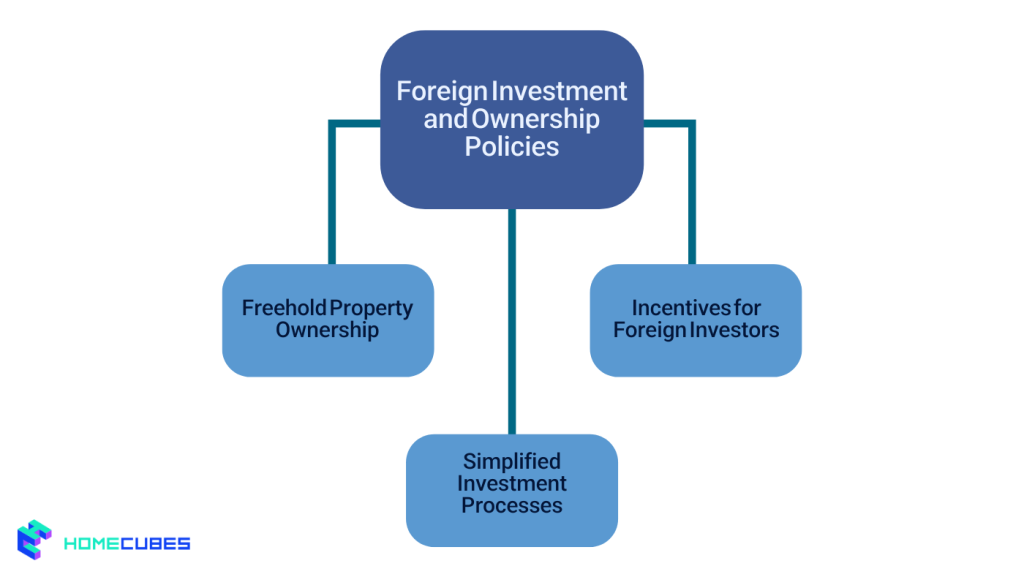
Since 2002, the UAE has allowed foreign investors to own freehold property in specific areas of cities like Dubai and Abu Dhabi. This move has been one of the key drivers of growth in the real estate market, especially in terms of luxury residential and commercial properties. With more foreigners being allowed to purchase property, demand for real estate has soared.
In addition to property ownership reforms, the UAE government has introduced several policies to encourage foreign investment, including long-term residency visas for investors. The introduction of the Golden Visa program allows investors to secure long-term residency in the country, providing additional security and incentive for those purchasing real estate.
The UAE has streamlined the real estate investment process for foreigners, making it easy to purchase, register, and transfer ownership of property. Online platforms and digital services further simplify the process, making it easier for international investors to navigate the market.
The UAE government has heavily invested in infrastructure projects over the past few decades. This investment has significantly influenced the UAE economic policies real estate market, with improvements to transportation, utilities, and urban planning driving growth in both residential and commercial properties.
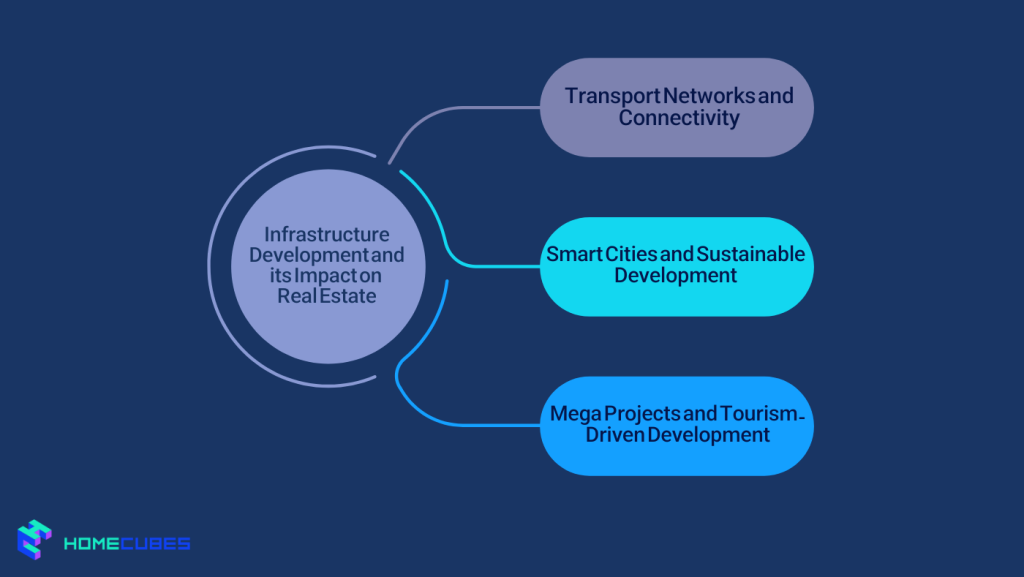
The development of modern infrastructure, such as the Dubai Metro, expanded highways, and airports, has increased the attractiveness of certain locations. Properties located near transport hubs are particularly desirable, driving up demand in key areas. The government’s focus on connectivity between cities and regions enhances the value of real estate and opens up new areas for development.
The UAE has made significant strides in building sustainable and “smart” cities. Projects like Masdar City in Abu Dhabi focus on renewable energy, green technology, and environmental sustainability. These initiatives are helping to shape the future of real estate in the country, as buyers and renters increasingly seek eco-friendly properties.
The UAE has also pioneered some of the world’s most iconic mega projects, such as the Palm Jumeirah and Burj Khalifa. These projects not only boost the country’s image globally but also drive demand for both commercial and residential real estate. Tourism, which is a vital part of the economy, also influences real estate demand, especially in areas that cater to hospitality and short-term rentals.
The UAE’s monetary and financial policies are vital in shaping the real estate sector. These policies directly influence the cost of borrowing, interest rates, and the availability of financing options for both developers and homebuyers.
The UAE Central Bank’s monetary policies, including keeping interest rates low, have made it easier for property buyers to secure loans. This has led to increased demand for real estate, especially in residential properties, as more people are able to finance their purchases with favorable terms.
Financial institutions in the UAE offer loans to property developers at competitive rates. This facilitates large-scale real estate projects, ensuring that the market continues to evolve with the demand for new properties. As developers take on new projects, the market sees an influx of high-quality, modern residential and commercial spaces.
The UAE Central Bank has introduced measures to regulate mortgage lending, ensuring that the real estate market remains stable. While mortgage rates are low, the government has put policies in place to ensure responsible lending practices, which protects both buyers and the broader economy from overexposure to debt.
The global pandemic introduced a period of economic uncertainty for the UAE, but the government’s quick response helped minimize its impact on the real estate sector. The government implemented various economic measures, including stimulus packages, which helped maintain liquidity in the market.
The UAE introduced a series of financial aid packages to support businesses, including real estate developers. These packages provided loans, delayed payments, and other forms of assistance to ensure the continued development of key projects.
After the initial impact of COVID-19, the UAE economy began to recover swiftly, aided by strong governmental policies, vaccination campaigns, and the resumption of tourism. The real estate market rebounded quickly, with increased demand for residential and vacation properties.
The UAE economic policies real estate market are deeply intertwined, with government policies directly influencing property demand, investment, and development. The UAE’s focus on economic diversification, tax incentives, foreign investment, infrastructure development, and monetary policies have all contributed to the country’s real estate growth.
Foreign investors, developers, and buyers are encouraged to take advantage of the favorable environment created by these policies. With continued government support and the continued diversification of the economy, the UAE’s real estate sector will likely remain a strong and profitable investment opportunity for years to come.
Homecubes has developed their property tokenization platform in full compliance with UAE regulation on asset tokenization focusing on the Dubai real estate market. Contact us at your earliest possible to take advantage of such a lucrative
Table of Contents Introduction Global Demand Dubai Real Estate – Snapshot Why Dubai Stands Out…
Dubai’s real estate market has moved from a speculative frontier to a globally recognized hub…
Table of Contents Introduction Market Overview: H1 2025 by the Numbers Key Drivers Behind the…


