


The Future of Governance: Decentralized Autonomous Organizations (DAOs)
September 30, 2024


As the world becomes increasingly digital, the structures that govern our societies and organizations are also evolving. Decentralized Autonomous Organizations (DAOs) represent a transformative shift in governance, leveraging blockchain technology to create transparent, inclusive, and efficient systems. This article explores the concept of DAOs, their potential impact on governance, and the challenges they face in shaping the future.
💡 Top 3 Perks of DAOs: Shaping the Future of Decentralized Governance 💡
Decentralized Autonomous Organizations (DAOs) are revolutionizing the way communities and businesses operate. By leveraging the power of blockchain, DAOs offer a unique blend of transparency, security,… pic.twitter.com/zYGVHqRxuL
— Zeebu (@zeebuofficial) August 29, 2024
A DAO is a new type of organization that operates on a blockchain, relying on smart contracts to automate decision-making and governance processes. Unlike traditional organizations, which are typically hierarchical and centralized, DAOs distribute power among their members, allowing for collective decision-making. Members participate by holding governance tokens, which grant them voting rights and influence over the organization’s direction.
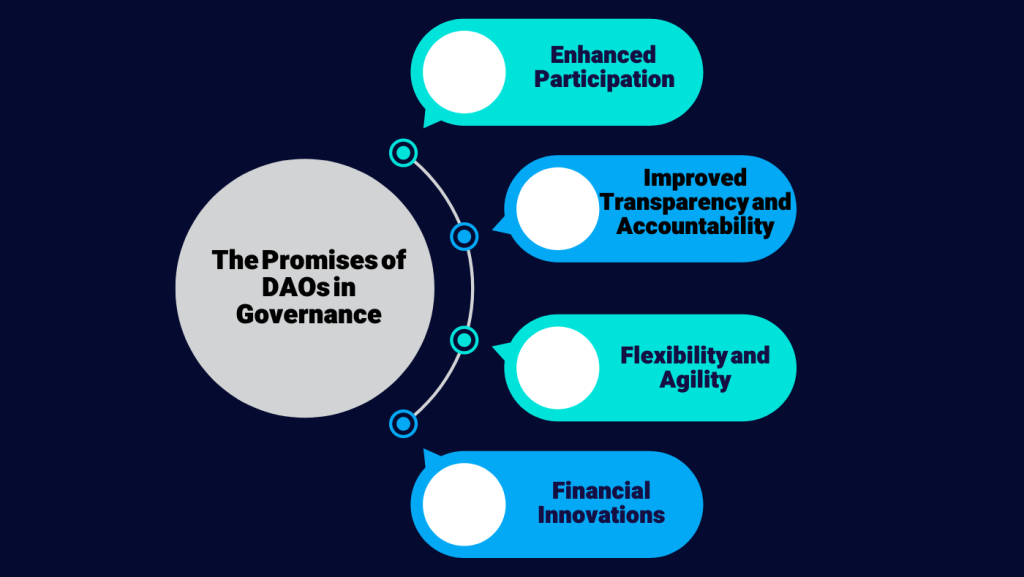
One of the most compelling aspects of DAOs is their ability to facilitate broader participation in governance. By lowering barriers to entry, DAOs enable anyone with an internet connection to engage in decision-making processes.
DAOs operate on transparent systems that can enhance accountability:
DAOs can adapt more quickly than traditional organizations, responding to changes in the environment or community needs.
DAOs also introduce innovative financial mechanisms that can enhance governance.
Several DAOs are already making waves in various sectors, illustrating the potential of this governance model:
DAOs are poised to disrupt multiple sectors:
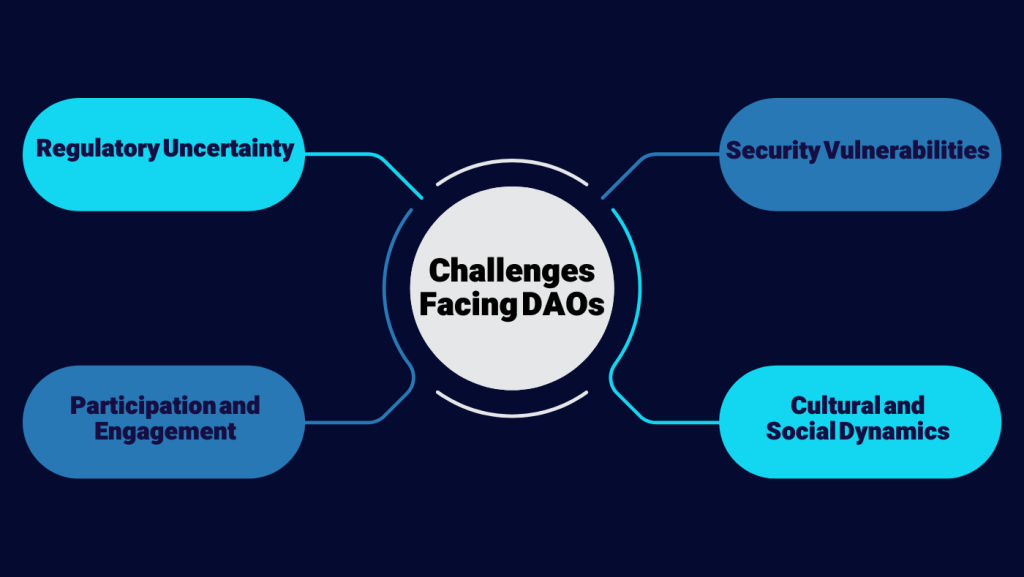
Despite their potential, DAOs face significant challenges that must be addressed for them to succeed:
The regulatory landscape for DAOs is still developing, and governments worldwide are grappling with how to classify and regulate these organizations. This uncertainty can hinder the growth and acceptance of DAOs.
Smart contracts, while powerful, can also be vulnerable to exploits and bugs:
While DAOs aim for inclusivity, achieving active participation remains a challenge:
DAOs operate in diverse environments, and cultural differences can impact their effectiveness:
As DAOs continue to mature, we can expect to see the emergence of new governance models that incorporate elements from both traditional and decentralized systems. Hybrid approaches may combine the efficiency of DAOs with the accountability of established institutions.
DAOs could integrate with traditional governance structures, offering innovative solutions to long-standing challenges:
DAOs are inherently iterative, allowing them to learn from their experiences and adapt over time:
Decentralized Autonomous Organizations (DAOs) have the potential to redefine governance in the digital age. By fostering transparency, inclusivity, and agility, DAOs can empower individuals to engage actively in decision-making processes. While challenges remain, the promise of DAOs as a vehicle for innovative governance is undeniable. As we move forward, embracing the principles of decentralization may not only enhance organizational effectiveness but also lead to more equitable and participatory societies. The future of governance lies in the hands of the communities willing to embrace these changes and shape the world collaboratively.
If you have any question or enquiry about DAO, how it works and how it affects the real estate market in the UAE, we encourage you to contact us with confidence. On top of that, we will be more than happy to share detailed information about our property tokenization projects in Dubai with you.

Table of Contents Introduction Global Demand Dubai Real Estate – Snapshot Why Dubai Stands Out…

Dubai’s real estate market has moved from a speculative frontier to a globally recognized hub…

Table of Contents Introduction Market Overview: H1 2025 by the Numbers Key Drivers Behind the…


