The Role of Decentralized Finance (DeFi) in Dubai Real Estate Investment
October 18, 2024


Dubai’s real estate market has long been a magnet for investors worldwide, thanks to its strategic location, robust infrastructure, and favorable regulatory environment. As the market continues to evolve, so does the technology that underpins it. One of the most significant advancements is decentralized finance (DeFi), which leverages blockchain technology to create a more open and efficient financial system. This article explores the role of DeFi in Dubai’s real estate investment landscape, highlighting its benefits, challenges, and potential future developments.
Real-world Assets (RWA) & the Tokenisation & Revolution of Real Estate.
Blockchain in the Real Estate Market is about to Revolutionise the Industry.
Small or big investors, landlords, real estate agencies & even state institutions will be leveraging Blockchain technology.
In… pic.twitter.com/4MsNziZhMj
— Crypto Lord (@Thecryptolord_) March 2, 2024
Decentralized finance refers to a system of financial applications built on blockchain that is revolutionizing mortgage lending in Dubai and globally while operating without traditional intermediaries, such as banks or financial institutions. DeFi aims to provide more accessible, transparent, and efficient financial services through smart contracts, which are self-executing contracts with the terms of the agreement directly written into code.
In the context of real estate, DeFi can facilitate various processes, including property transactions, tangible asset tokenization, lending, and investment pooling. By removing intermediaries, DeFi can reduce transaction costs, enhance transparency, and broaden access to real estate investments.
Dubai’s real estate market has seen significant growth, driven by factors such as population growth, tourism, and foreign direct investment. The government has implemented various initiatives to attract global investors, including the introduction of long-term visas and the easing of ownership restrictions for foreigners. However, despite these efforts, traditional real estate investment still faces challenges, including high entry costs, lengthy transaction processes, and limited liquidity.
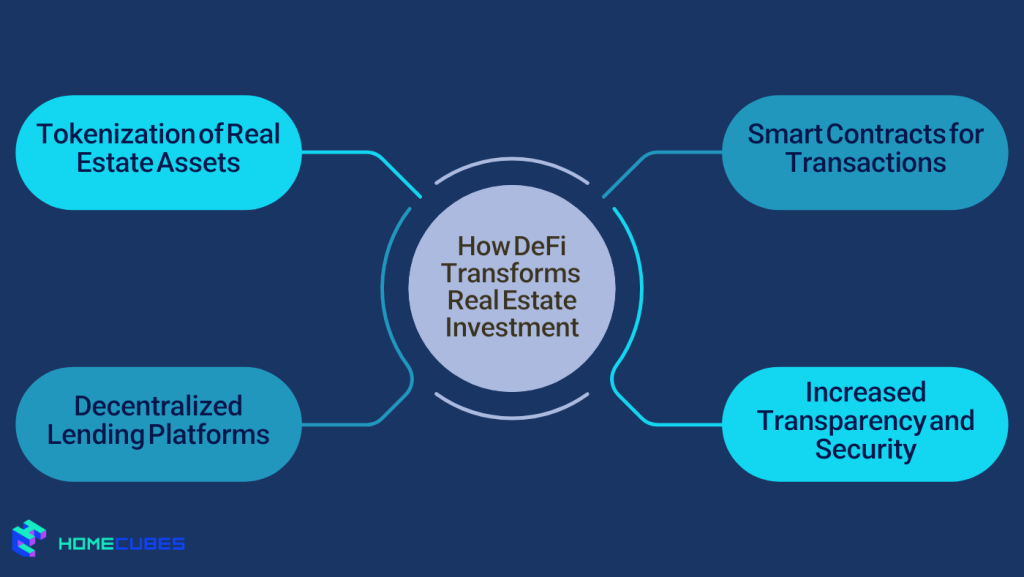
One of the most promising applications of DeFi in real estate is the tokenization of assets. The process of tokenizing a property involves converting real estate properties into digital tokens on a blockchain, representing fractional ownership. This allows investors to buy, sell, or trade portions of properties without needing to purchase entire assets.
Real world asset tokenization evolutionize the Dubai real estate market by democratizing access to real estate investments. Smaller investors who previously couldn’t afford to enter the market can now purchase fractions of high-value properties, enhancing liquidity and market participation.
DeFi utilizes smart contracts to automate and streamline real estate transactions. In traditional processes, numerous intermediaries, such as brokers, notaries, and legal advisors, are involved, each adding time and costs. Smart contracts eliminate these intermediaries by executing predefined agreements automatically once conditions are met.
For example, a smart contract can facilitate the transfer of ownership upon receipt of payment, significantly reducing transaction time and costs. This efficiency aligns well with Dubai’s vision to enhance its real estate sector through technology and innovation.
Access to financing is a common barrier for real estate investors. DeFi platforms for real estate investment offer decentralized lending solutions that allow investors to secure loans against their assets without the need for traditional banks. In Dubai, utilizing DeFi for real estate investment can be particularly beneficial for developers and property buyers looking for quick financing solutions.
These platforms often operate on a peer-to-peer basis, enabling borrowers to access funds from a global pool of lenders. The transparency and reduced fees associated with DeFi lending for real estate investors can provide a more attractive option for them compared to conventional financing routes.
Blockchain technology inherently offers greater transparency and security. Each transaction is recorded on an immutable ledger, providing a clear and auditable trail of ownership and transaction history. This transparency can help mitigate issues such as fraud, which can be a concern in high-value markets like Dubai.
Moreover, the security features of blockchain technology reduce the risks associated with data manipulation or loss, offering both investors and developers peace of mind.
While DeFi in real estate investment presents numerous opportunities, it also faces challenges that could hinder its adoption in Dubai’s real estate market:
The regulatory landscape surrounding DeFi in real estate investment is still evolving. While Dubai has been proactive in creating a supportive environment for blockchain technologies, the legal status of DeFi platforms and tokenized assets is not yet fully established. Investors and developers may be hesitant to engage with DeFi due to concerns about compliance and the potential for regulatory changes.
Many potential investors in Dubai may lack understanding or familiarity with DeFi concepts and technologies. Increased education and outreach are essential to help stakeholders comprehend the benefits and risks associated with DeFi in real estate.
DeFi relies heavily on blockchain technology, which, while promising, faces its own set of challenges, including scalability, interoperability, and security vulnerabilities. Ensuring that these platforms can handle the specific demands of real estate transactions is crucial for their widespread adoption.
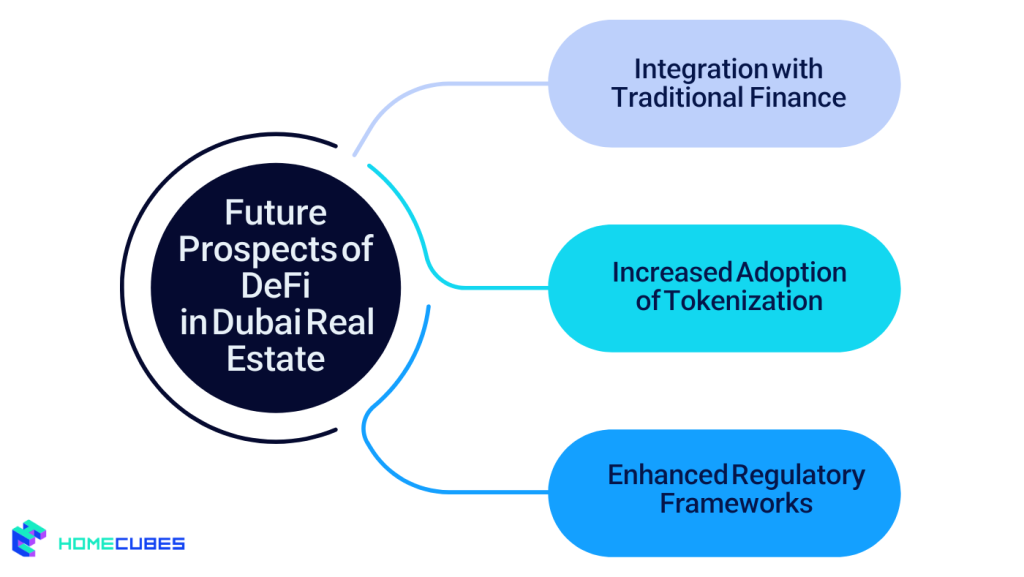
The future of DeFi in Dubai’s real estate sector appears promising, driven by a convergence of technological advancements, regulatory developments, and changing investor preferences. As the market matures, several trends may emerge:
Over time, we may see more collaboration between DeFi platforms and traditional financial institutions. This hybrid model could leverage the strengths of both systems, enhancing the efficiency and accessibility of real estate investment.
As awareness of tokenization grows, more developers may choose to tokenize their properties, providing diverse investment opportunities. This could lead to the creation of new financial products and services tailored to the needs of investors in the Dubai market.
As Dubai seeks to establish itself as a global hub for innovation, we may witness the development of clear regulatory frameworks for DeFi in real estate. This could foster greater confidence among investors and developers, facilitating smoother integration of DeFi solutions in real estate.
Decentralized finance is poised to transform the real estate investment landscape in Dubai. It offers innovative solutions that enhance accessibility, transparency, and efficiency. While challenges remain, the potential for DeFi to disrupt traditional practices and attract a broader range of investors is significant. Dubai continues to embrace technology and innovation. Hence, the integration of DeFi into its real estate market could redefine the investment experience, making it more inclusive and dynamic. The future holds exciting possibilities for both seasoned investors and newcomers alike in this vibrant market.
For further information on the options DeFi provides for small scale investors in the Dubai real estate market, you may contact us. Our talented professionals will guide you on DeFi applications. Besides, we will get you detailed information on our exciting property tokenization projects using DeFi in Dubai.

Table of Contents Introduction Global Demand Dubai Real Estate – Snapshot Why Dubai Stands Out…

Dubai’s real estate market has moved from a speculative frontier to a globally recognized hub…
Table of Contents Introduction Market Overview: H1 2025 by the Numbers Key Drivers Behind the…