The Complete Guide to UAE Real Estate Management Software
March 13, 2025


The UAE’s property market is surging, attracting global investors and billions in annual transactions. According to CBRE’s UAE Real Estate Market Review Q2 2025, residential rents in Dubai have grown by more than 20% year-on-year, with Abu Dhabi also recording robust leasing activity.
This growth comes with challenges: landlords and asset managers must manage thousands of leases, ensure compliance, respond to tenant requests, and maintain transparency for investors. Considering Proptech companies emerging in the UAE, manual processes no longer suffice. UAE real estate management software (REMS) is now a core tool for sustaining profitability and compliance.
As a realtor, house hunting for clients takes more than listings — it takes hours of research, filtering, and personalized touches.
With Manus AI, sales professionals can:
→ Search across platforms in seconds
→ Filter based on each client’s unique preferences
→ Instantly… pic.twitter.com/nR5mckUTy0— ManusAI (@ManusAI_HQ) July 22, 2025
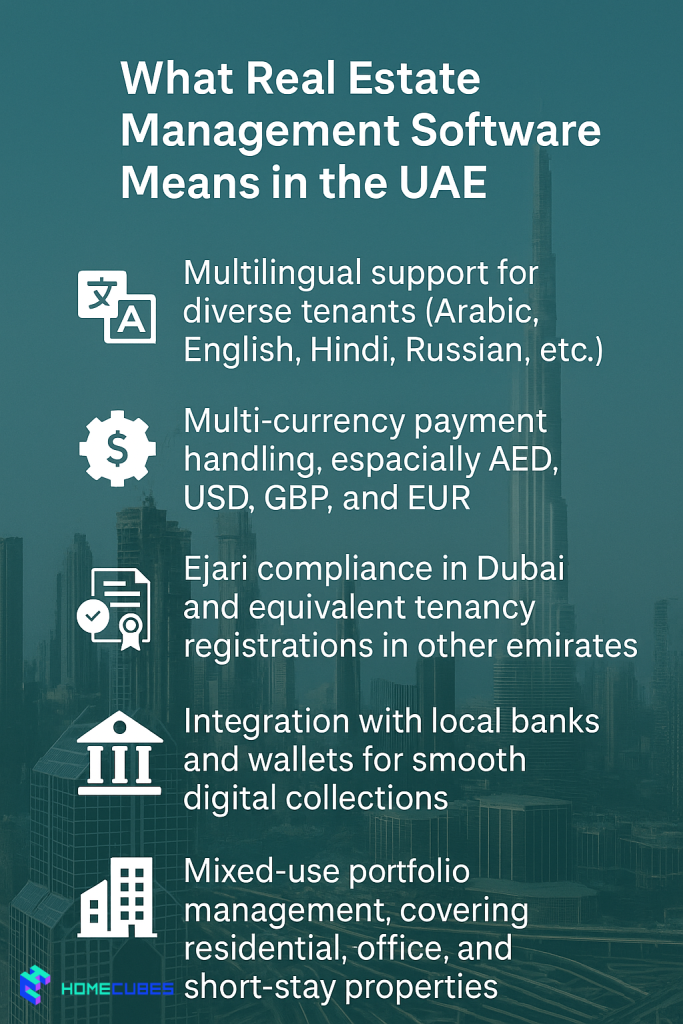
Globally, REMS automates tenant management, rent collection, and maintenance workflows. In the UAE, the requirements are more complex:
With increasing regulation and international investor scrutiny, as well as AI utilization in UAE real estate, REMS in the UAE is about far more than efficiency—it’s about trust, compliance, and investor confidence.
As JLL’s UAE Living Market Dynamics Q2 2025 highlights, over 25,000 new residential units are expected to enter Dubai’s market this year. With supply rising, effective property management can be the difference between achieving healthy yields and prolonged vacancies.
Nearly 85% of Dubai residents rent. Landlords need automated workflows for renewals, deposits, and arrears to stay competitive.
In Dubai, landlords must comply with the Ejari registration and renewal process. Non-compliance risks fines and disputes. Software can auto-generate tenancy packs aligned to DLD requirements.
International investors expect real-time reporting on returns, arrears, and occupancy. Dashboards within REMS provide instant oversight.
Deloitte’s Dubai Real Estate Predictions 2025 notes that operational efficiency is central to sustaining investor returns. Paper-based systems are increasingly uncompetitive.
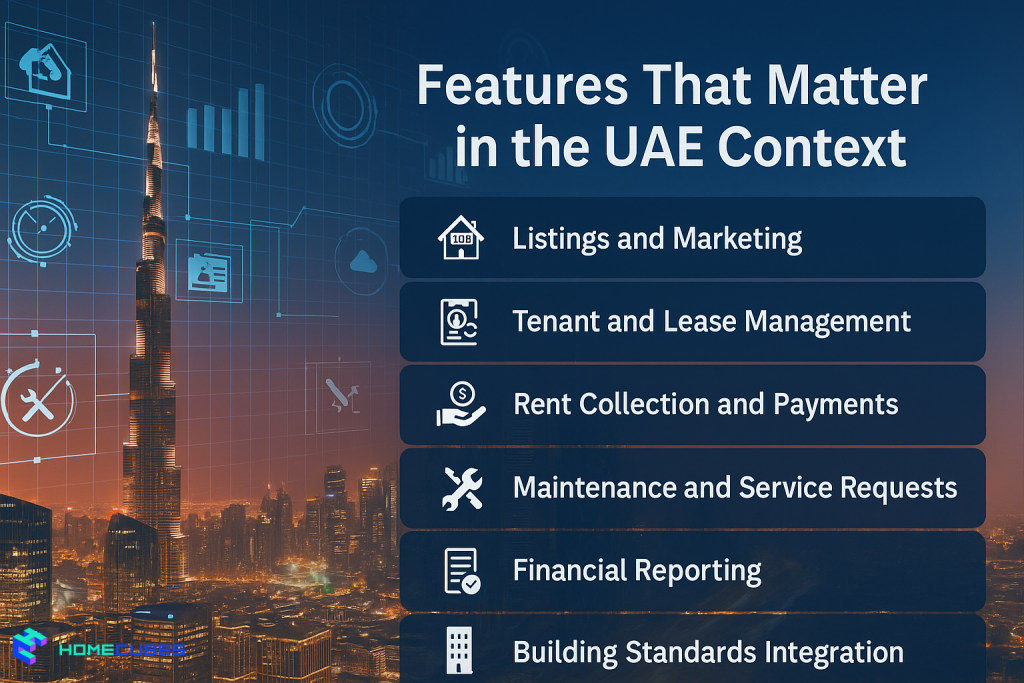
Advanced software increasingly integrates data aligned to the Dubai Building Code, ensuring landlords meet design and safety requirements.
Profile: A Dubai landlord managing 120 units in Marina and JVC.
Challenges:
Solution: Implemented a UAE-focused REMS with digital rent collection, automated renewals, and maintenance ticketing.
Results after 6 months:
Smart landlords request transparent breakdowns and cap renewal increases.
By 2030, the UAE market will see:
As CBRE’s UAE Real Estate Market Review Q2 2025 confirms, technology adoption will play a decisive role in yield preservation as the market becomes more competitive.
UAE real estate is firmly moving into a digital-first phase. For landlords and investors, adopting real estate management software is no longer just about convenience — it’s about protecting revenue, ensuring compliance, and staying competitive in a fast-growing market.
With thousands of new units entering supply, stricter regulations, and rising expectations from global investors, software-driven operations give landlords a decisive edge. The benefits are clear: smoother tenant experiences, stronger cash flow through timely collections, and audit-ready compliance that reduces legal risks.
Those who embrace these tools now will not only preserve yields but also build credibility with tenants and international partners. Those who wait risk inefficiency, financial penalties, and losing ground in an increasingly professionalized property landscape.
Is REMS integrated with Ejari?
Yes, leading platforms automate contract templates and workflows aligned to Ejari submissions.
Can it support both long-term and short-stay rentals?
Yes, advanced systems handle calendars, cleaning, and turnover tasks alongside annual lease tracking.
Is tenant and investor data secure?
Reputable vendors use encryption, redundancy, and compliance with international standards.
Is REMS useful for small landlords?
Yes, even portfolios under 10 units benefit from automated rent collection and renewal alerts.
How long does deployment take?
Smaller portfolios can be implemented in 6–10 weeks; larger, mixed portfolios may require more.
At Homecubes, we’re building a platform designed for landlords and investors who want smarter, simpler, and more transparent property operations in the UAE.
⚠️ Regulatory note: Homecubes has applied for a VARA license to operate a real estate tokenization platform in Dubai. Our services will launch once this license is approved, ensuring compliance and investor protection.
📩 Explore the future of real estate management with us. Contact Homecubes today.

Table of Contents Introduction Global Demand Dubai Real Estate – Snapshot Why Dubai Stands Out…

Dubai’s real estate market has moved from a speculative frontier to a globally recognized hub…

Table of Contents Introduction Market Overview: H1 2025 by the Numbers Key Drivers Behind the…