Why Dubai is Becoming a Global Hub for Real Estate Staking
December 10, 2024


Dubai, renowned for its skyline and luxury real estate, is rapidly embracing real estate staking, a transformative investment model enabled by blockchain in real estate. This digital asset class allows investors to stake tokens tied to real estate, earning returns through fractional ownership. Dubai’s combination of cutting-edge technology, progressive regulation, and robust financial infrastructure positions it as a prime location for real estate staking. As the global property market shifts toward decentralization, Dubai’s real estate ecosystem is evolving. It will be attracting global investors to participate in its booming, tech-driven real estate market.
From rental cash flows and REITs to individual properties, tokenized real estate can enhance liquidity, encourage price discovery, and lower administrative costs in the real-estate market.
Here are four theoretical implementations of tokenized real estate 🧵⬇️ pic.twitter.com/QkUfrkscsL
— Chainlink (@chainlink) May 30, 2023
Real estate staking allows investors to lock digital assets, like cryptocurrencies or tokenized property shares, on blockchain platforms in return for a share of property-generated income. By tokenizing physical assets, such as luxury real estate, fractional ownership becomes possible. Token holders can earn rental income or profits. Those income are managed through smart contracts—self-executing contracts on the blockchain that ensure transparency and security. Real estate staking brings affordable property investment to Dubai by democratizing access to high-value properties, making them accessible to a global pool of investors.
Dubai’s forward-thinking approach to technology and business has created an environment conducive to the growth of blockchain and digital assets. The Dubai Blockchain Strategy aims to make Dubai a fully blockchain-powered government by 2025. It sets the stage for innovations like real estate staking. The Dubai Land Department (DLD) has already implemented blockchain for property registration and transaction transparency. Additionally, the Virtual Assets Regulatory Authority(VARA) provides clear regulations for cryptocurrency businesses. VARA offers legal clarity for real estate staking platforms, which builds trust among investors.
Tokenization is a key driver of real estate staking, as it divides high-value properties into smaller, tradeable digital tokens. Dubai is at the forefront of real estate tokenization, with several luxury properties being broken into fractional shares that investors can buy. This process makes it easier for smaller investors to participate in Dubai’s luxury market, traditionally reserved for the affluent. The Dubai International Financial Centre (DIFC) has established a regulatory framework that supports tokenized assets, which enhances the liquidity of Dubai’s real estate market and attracts international investors.
Dubai has long been recognized as a global financial center. The city offers a favorable tax environment with no capital gains, inheritance, or property taxes, making it an attractive destination for real estate investors. Its Dubai International Financial Centre (DIFC) serves as a base for multinational banks, fintech companies, and wealth management firms. This robust financial ecosystem supports the growth of real estate staking, providing the infrastructure necessary to facilitate secure digital transactions. Dubai’s status as a financial hub, coupled with blockchain adoption, positions it as an ideal base for real estate investment.
Dubai’s real estate developers, such as Emaar and DAMAC, are embracing blockchain technology to offer innovative real estate investment opportunities. These companies are increasingly tokenizing luxury properties, enabling fractional ownership and staking. In parallel, fintech start-ups in Dubai are creating platforms that facilitate real estate staking, allowing investors to stake their digital assets and earn returns. By combining real estate development with blockchain, Dubai is paving the way for new investment models, making the city a hub for tech-driven property investment solutions.
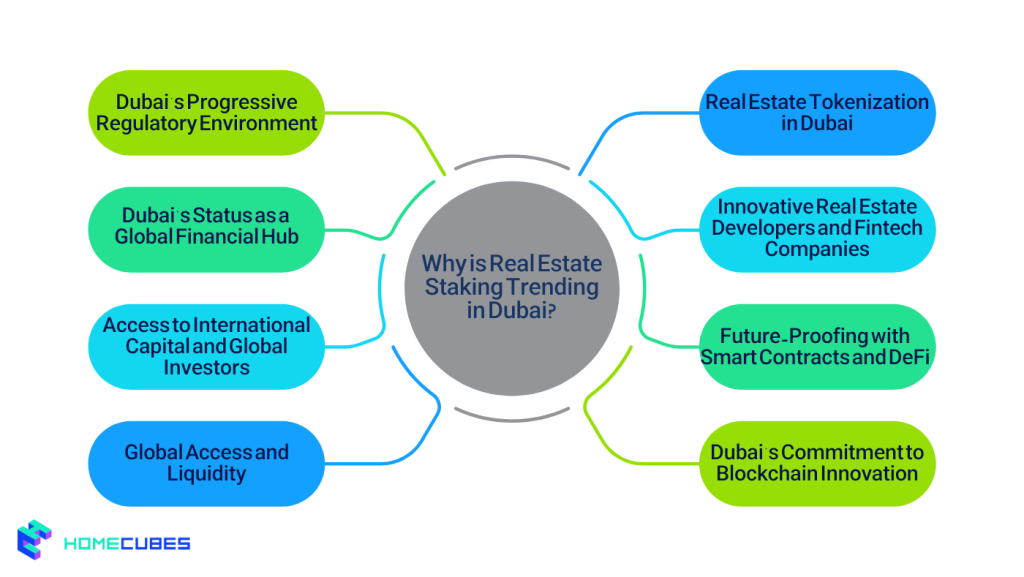
One of the key benefits of real estate staking is its ability to attract global capital. Traditionally, real estate investment required significant upfront capital, often limiting participation to high-net-worth individuals. Real estate staking allows smaller investors worldwide to gain exposure to Dubai’s lucrative property market. By using digital tokens, which can be traded on blockchain platforms, real estate becomes more liquid, enabling international investors to access Dubai’s market more easily. This democratization of access is a key factor in Dubai’s emergence as a leading destination for digital real estate investment.
Smart contracts and decentralized finance (DeFi) technologies are at the heart of real estate staking, automating processes such as revenue distribution, property management, and ownership transfer. These technologies make real estate transactions more efficient, secure, and transparent. Smart contracts eliminate the need for intermediaries, reducing costs and improving the speed of transactions. Dubai’s fintech ecosystem is heavily involved in developing these technologies, positioning the city as a leader in DeFi applications for real estate. As DeFi grows, Dubai continues to lead the blockchain innovations in real estate finance.
Real estate staking is inherently global, offering access to investors from anywhere in the world. Traditionally, investing in Dubai’s real estate market required either direct property purchases or local brokers. With staking, global investors can participate in Dubai’s property market through tokenized real estate shares. These tokens can be traded, creating liquidity in a market traditionally known for its illiquidity. The ability to easily trade and stake tokens representing real estate makes Dubai an attractive destination for international capital, further solidifying its role as a global leader in digital real estate investments.
Dubai has long prioritized innovation, and its government’s commitment to blockchain technology is a testament to that. In addition to the Dubai Blockchain Strategy, Dubai has established several initiatives to support blockchain start-ups, including the Dubai Future Foundation and the Dubai International Blockchain Week. These initiatives foster a collaborative environment for developers and entrepreneurs to create new blockchain solutions. By positioning itself as a blockchain-friendly city, Dubai ensures that it remains a global leader in digital finance and real estate investment, making it an ideal place for real estate staking to thrive.
Dubai’s rapid rise as a global hub for real estate staking is driven by its combination of forward-thinking regulations, technological adoption, and its established position as a financial powerhouse. Through tokenization, real estate staking allows for fractional ownership, increasing accessibility to Dubai’s luxury real estate market. The integration of blockchain technology and decentralized finance (DeFi) further positions Dubai as a leader in digital real estate investment. With international access, liquidity, and a favorable regulatory environment, Dubai is creating a dynamic and future-proof ecosystem for investors, developers, and fintech innovators alike.
Homecubes, as the leading real estate tokenization platform focusing on the Dubai real estate market has got a range of real estate tokenization projects in the pipeline. Contact us with confidence, if you are seeking lucrative fractional investment opportunities in prime locations across Dubai.
Table of Contents Introduction Global Demand Dubai Real Estate – Snapshot Why Dubai Stands Out…
Dubai’s real estate market has moved from a speculative frontier to a globally recognized hub…
Table of Contents Introduction Market Overview: H1 2025 by the Numbers Key Drivers Behind the…