The Impact of Blockchain on Commercial Real Estate Leasing in Dubai
January 23, 2025


Dubai’s commercial real estate market has long been a magnet for global investors and businesses seeking prime office space, retail outlets, and industrial properties. However, traditional commercial real estate leasing processes often involve slow, cumbersome paperwork, numerous intermediaries, and a lack of transparency. Blockchain technology is now stepping in to transform the leasing process, providing faster, more secure, and more transparent solutions.
As part of our commitment to ensuring the sustained progress of government initiatives that reinforce Dubai’s global leadership, I met with Marwan bin Ghalita, Director General of the Dubai Land Department, to review the strategic projects of the Dubai Real Estate Sector Strategy… pic.twitter.com/2g0yodwMmS
— Hamdan bin Mohammed (@HamdanMohammed) November 25, 2024
This article explores how blockchain is reshaping commercial real estate leasing in Dubai, making transactions more efficient and trustworthy for all parties involved.
Blockchain is a decentralized digital ledger that securely records transactions across a network of computers. It ensures that once a transaction is added to the blockchain, it cannot be altered, offering transparency, security, and efficiency. In the context of commercial real estate leasing, blockchain allows property owners, tenants, and brokers to conduct transactions that are faster, more transparent, and more secure.
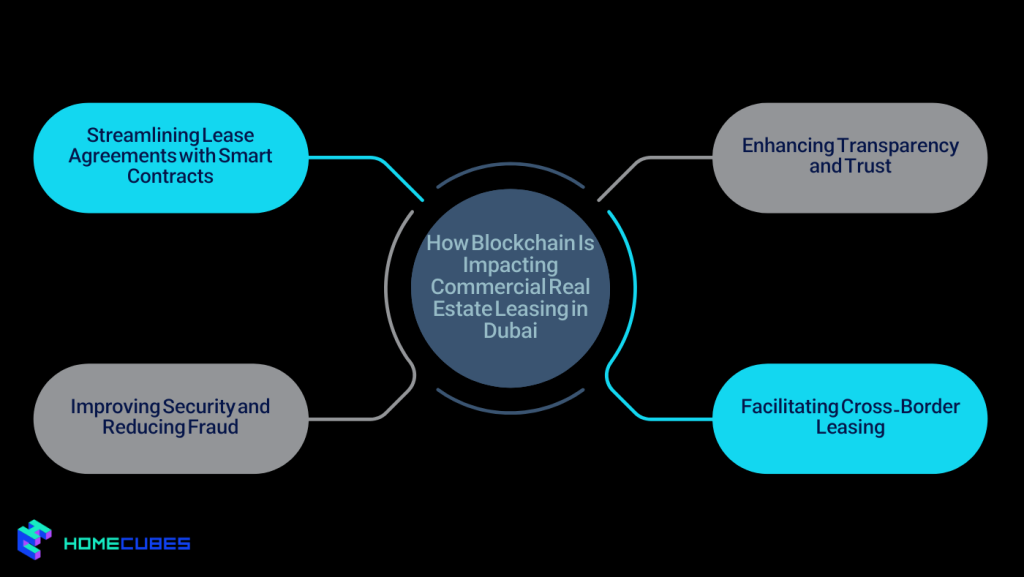
One of the most significant ways blockchain is transforming commercial real estate leasing in Dubai is through the use of smart contracts. Smart contracts are self-executing digital agreements that automatically enforce the terms of a lease, at the time of meeting the conditions. These computer programs called smart contracts, are revolutionizing the real estate escrow services in the UAE by removing the need for intermediaries such as lawyers and notaries, significantly speeding up the leasing process.
For example, if a commercial tenant signs a lease agreement on a blockchain-based platform, smart contracts automatically enforce the terms such as rent amount, duration, and payment schedule. If both parties meet their obligations, the contract exectues without further intervention, making the entire process more efficient.
Transparency is a major concern in the traditional commercial real estate leasing process. Landlords and tenants may have concerns over hidden clauses, potential lease modifications, or unclear terms. Blockchain addresses these issues by providing a transparent and immutable record of all lease transactions.
Every transaction, including lease agreements, payments, and amendments, is recorded on the blockchain. This record is accessible to all relevant parties, providing a clear and verifiable history of the lease. Investors, property owners, and tenants can easily track the status of the lease. This way, they can ensure of meeting all conditions and minimizing all disputes.
The risk of fraud is a concern in many industries, and real estate is no exception. In commercial real estate leasing, issues such as fake contracts, unauthorized lease modifications, or fraudulent tenant applications can create significant challenges. Blockchain addresses these risks by offering secure, tamper-proof transactions.
Each lease agreement and related transaction is encrypted and recorded on the blockchain. Hence, it is virtually impossible for malicious actors to alter or manipulate the data. Additionally, blockchain’s decentralized nature means there is no central authority that can be compromised. That would reduce the risk of data breaches or fraud.
Dubai is a global business hub, attracting multinational companies and investors from around the world. However, international commercial real estate leasing often involves complex paperwork, currency conversions, and cross-border regulations that can slow down the process. Blockchain unlocks cross-border real estate investment in the UAE and simplifies these challenges. That happens through allowing cross-border leasing transactions to be executed seamlessly and securely.
With blockchain, international tenants and landlords can enter into lease agreements without the need for intermediary banks or currency exchanges. Blockchain’s ability to process transactions in real-time, across borders, and without the need for middlemen makes it an ideal solution for global leasing in Dubai.
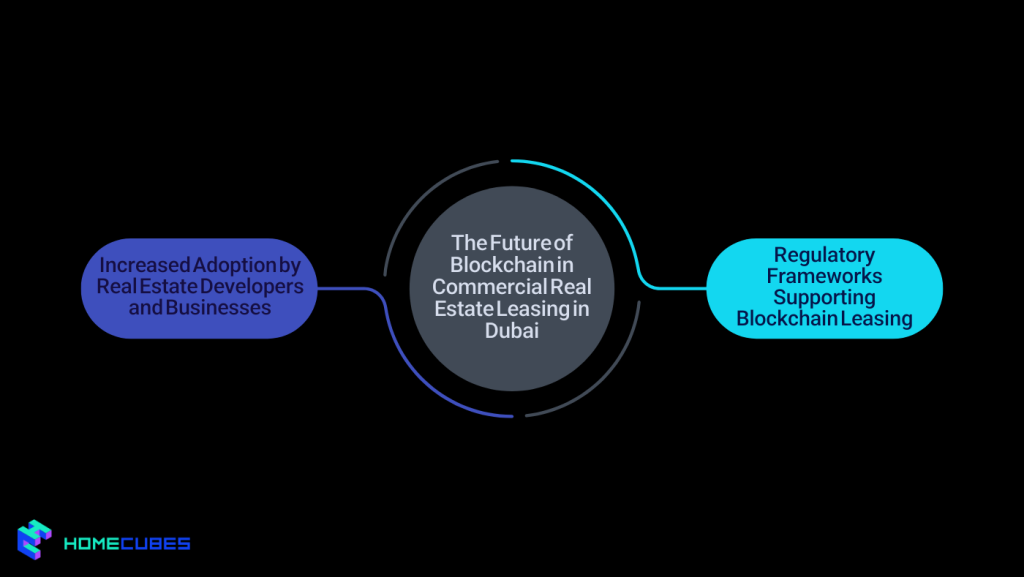
Blockchain technology continues to prove its value in commercial real estate leasing. Therefore, more real estate developers, property owners, and businesses in Dubai will adopt it. By leveraging blockchain’s efficiency, transparency, and security, these stakeholders will be able to improve the leasing process, attract more tenants, and optimize property management.
As blockchain technology grows in Dubai’s commercial real estate market, regulators are expected to introduce more supportive regulations. A clear regulatory framework for blockchain in real estate leasing will provide additional legal certainty, making it easier for landlords and tenants to adopt blockchain-based solutions.
While blockchain offers numerous advantages, its regulatory landscape in Dubai’s commercial real estate sector is still developing. Issues such as legal recognition of smart contracts, property rights, and tax treatment of blockchain-based transactions will need to be addressed for widespread adoption.
Despite blockchain’s potential, some stakeholders in the commercial real estate market may face challenges in adopting new technologies. Property owners, landlords, and tenants may need to invest in blockchain-based platforms, and there may be a learning curve involved in understanding how blockchain can be applied to leasing agreements.
Blockchain technology is poised to reshape the commercial real estate leasing landscape in Dubai. By streamlining lease agreements, enhancing transparency, improving security, and facilitating cross-border transactions, blockchain offers a more efficient and trustworthy way to manage commercial leases. As blockchain adoption continues to grow, Dubai’s commercial real estate market will become more innovative and investor-friendly, further cementing the city’s position as a global real estate leader.
Homecubes has developed their property tokenization platform in full compliance with UAE regulation on asset tokenization focusing on the Dubai real estate market. Contact us at your earliest possible to take advantage of such a lucrative fractional investment opportunity in premium properties across Dubai.

Table of Contents Introduction Global Demand Dubai Real Estate – Snapshot Why Dubai Stands Out…

Dubai’s real estate market has moved from a speculative frontier to a globally recognized hub…
Table of Contents Introduction Market Overview: H1 2025 by the Numbers Key Drivers Behind the…