

Real Estate Tokenization: The Future of Property Investment in Dubai
October 28, 2024


Dubai has long been recognized as a global real estate hotspot, attracting investors from around the world with its luxurious developments, strategic location, and innovative approach to business. However, traditional property investment methods often come with significant barriers, such as high entry costs, complex processes, and a lack of liquidity. Tokenized tangible assets or in particular, real estate tokenization is emerging as a groundbreaking solution that promises to revolutionize property investment in Dubai. This article delves into what real estate tokenization is, its benefits, challenges, and why it represents the future of property investment in the UAE.
The Dawn of Real-World Asset Tokenization
In a short span, the sector focusing on RWA tokenization has jumped from 22nd to 8th place among DeFi sectors, amassing a combined TVL of $2.385 billion.
What’s next? And what opportunities are already open?
Let’s explore ↓
As DeFi… pic.twitter.com/1EZ2IcTH0K
— Stacy Muur (@stacy_muur) September 21, 2023
The Process of tokenizing a real estate property refers to converting physical real estate assets into digital tokens on a blockchain. Each token represents a fraction of ownership in the property, allowing multiple investors to hold a stake in a single asset. This method leverages blockchain technology to enhance transparency, security, and efficiency in the real estate market.

One of the most compelling advantages of real estate tokenization is the significant reduction in barriers to entry. Traditional property investment often requires substantial capital, making it accessible primarily to wealthy individuals or institutional investors.
Tokenization allows individuals to invest in high-value properties with smaller amounts of capital, thus democratizing access to the real estate market. Fractional Ownership lowers the barriers to Dubai property investment and opens doors for a broader audience, including millennials and first-time investors who may not have had the opportunity to engage with the market otherwise.
Liquidity is a persistent challenge in the traditional real estate sector. Selling a property can be a lengthy and complex process, often taking months or even years. In contrast, tokenized real estate assets can be traded on secondary markets, allowing investors to buy and sell their tokens easily.
This increased liquidity is beneficial for both investors and property owners, facilitating quicker transactions and enabling more dynamic pricing. Investors can enter and exit positions with greater ease, making real estate investment more flexible and responsive to market changes.
Blockchain technology increases the transparency in Dubai’s property sales and investment, by storing transparent and immutable records of all transactions related to tokenized assets. Every transfer of ownership, rental payment, and financial transaction is recorded on the blockchain, allowing all stakeholders to access the same information in real time.
This transparency reduces the risk of fraud and enhances trust among investors, landlords, and tenants. The ability to verify ownership and transaction history easily creates a more reliable investment environment.
Real estate tokenization allows investors to diversify their portfolios by enabling them to invest in multiple properties across various sectors. This diversification is essential for risk management, as it helps investors spread their exposure across different assets rather than concentrating it in a single property.
With tokenization, investors can hold fractional stakes in a variety of properties, ranging from luxury apartments to commercial spaces, thus increasing their overall investment strategy’s resilience.
Tokenization opens up the opportunity for global investment, allowing individuals from anywhere in the world to invest in Dubai’s real estate market. This global reach can attract a diverse range of investors, increasing capital inflow into the UAE and further enhancing the local property market.
By breaking down geographical barriers, tokenization can create a more competitive and dynamic investment landscape, benefiting both investors and property developers.
Despite its many advantages, real estate tokenization also faces several challenges that need to be addressed for widespread adoption.
The regulatory landscape for tokenized assets in the UAE is still evolving. While the government has made significant strides in embracing blockchain technology, clear regulations governing the tokenization process are essential to protect investors and ensure compliance with existing laws.
Establishing a robust regulatory framework will be crucial for building confidence among investors and legitimizing tokenization as a viable investment model.
For tokenization to gain traction, there needs to be a concerted effort to educate potential investors and stakeholders about its benefits and workings. Many individuals may still be unfamiliar with blockchain technology and tokenization, which could hinder adoption.
Awareness campaigns and educational initiatives targeting real estate professionals, investors, and the general public can help foster a better understanding of how tokenization works and its advantages.
The successful implementation of real estate tokenization relies on robust technological infrastructure. Platforms facilitating tokenized real estate investments must ensure security, scalability, and user-friendliness to attract investors.
Collaboration between tech companies, real estate developers, and regulatory bodies will be essential to create a seamless and secure ecosystem for tokenized investments.
Dubai continues to innovate and adapt to changing market conditions. Hence, real estate tokenization is likely to play a pivotal role in shaping the future of property investment in the UAE. Several trends indicate that tokenization will gain further momentum in the coming years.
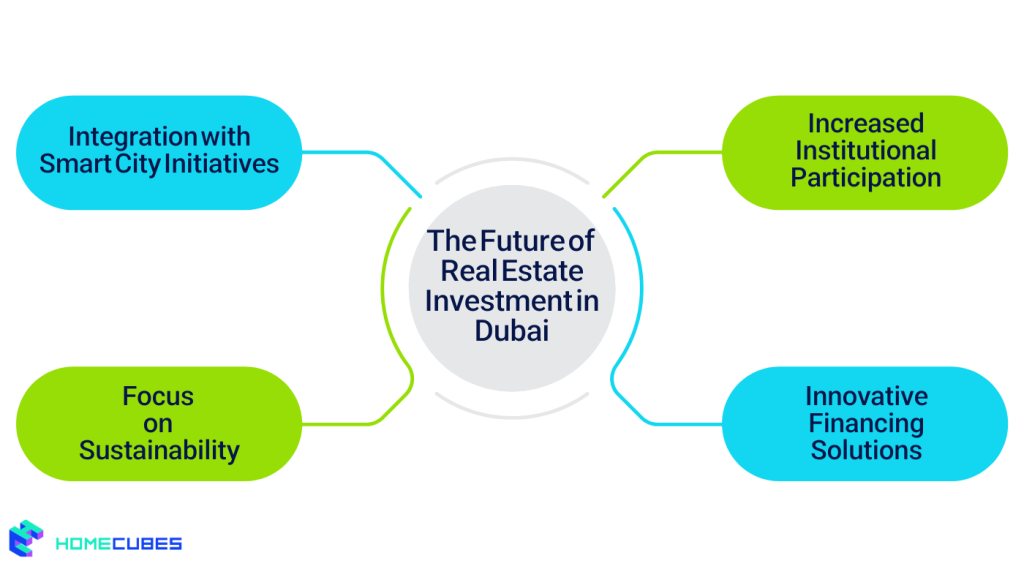
Dubai is at the forefront of developing smart city initiatives aimed at enhancing urban living through technology. Real estate tokenization aligns with this vision by providing a modern, efficient way to manage property investments and transactions. As smart city projects progress, tokenization could become a standard method for property transactions.
As awareness of the benefits of tokenization grows, institutional investors are likely to explore this innovative investment model. Increased participation from institutional players can lend credibility to tokenized real estate. As a conclusion, it attracts more retail investors, creating a virtuous cycle of investment and growth.
With the global emphasis on sustainability, tokenized real estate projects that prioritize eco-friendly developments are likely to gain traction. Investors are increasingly interested in supporting sustainable initiatives. Fortunately, tokenization can provide a transparent way to invest in properties that align with these values.
Tokenization may also lead to the development of new financing solutions in the real estate sector. By allowing fractional ownership, developers can raise capital more efficiently, enabling them to fund new projects and expand their portfolios without relying solely on traditional financing methods.
Real estate tokenization represents a transformative shift in the property investment landscape of Dubai. It offers a host of benefits that address many challenges associated with traditional real estate investment. By lowering barriers to entry, enhancing liquidity, increasing transparency, and enabling diversification, tokenization paves the way for a more inclusive and dynamic real estate market. The regulatory environment matures and market awareness grows. Hence, tokenization is more likely to become a cornerstone of property investment in the UAE. With its innovative approach to fractional ownership and blockchain technology, real estate tokenization is not just a trend. It will be the future of property investment in Dubai, promising to unlock new opportunities for investors and developers alike.
Homecubes is pioneering the process of converting traditional real estate investment into fractional real estate NFT. We encourage you to contact us to get further information about our exciting property tokenization projects in prime locations across Dubai.
Table of Contents Introduction Global Demand Dubai Real Estate – Snapshot Why Dubai Stands Out…
Dubai’s real estate market has moved from a speculative frontier to a globally recognized hub…
Table of Contents Introduction Market Overview: H1 2025 by the Numbers Key Drivers Behind the…


